Understanding Kung Fu from the Inside : Principle, Energy, and Mind
When we talk about Kung Fu, we almost always think of spectacular techniques: powerful strikes, acrobatic forms, movie-style fights or legendary warriors. Yet there exists a lesser-known, profoundly rich dimension: the internal martial arts.
These internal arts, also called neijia quan (内家拳), are not opposed to “external” styles; they are simply the subtle side. They do not replace physical combat, but develop energy, movement awareness, and balance of body and mind.
Yin and Yang: The Core of Martial Balance
To understand internal arts, one must first grasp a fundamental principle: Yin and Yang.
These are not opposing forces that cancel each other.
They are complementary polarities that balance each other.
In martial movement:
- Yang represents action, intensity, and dynamic force.
- Yin represents receptivity, softness, and relaxation.
No style is 100 % Yin or 100 % Yang. Even so-called “external” or “internal” styles are about balance and training priority.
External styles, by first developing the body, build a physical foundation that later integrates Qi and mind.
Internal styles, on the other hand, work first on energy and awareness, eventually producing refined physical power.
Three Main Internal Paths
Although there are many internal styles, three are the most widely known and often serve as an entry point to understand internal logic.
Tai Chi Chuan — movement as meditation
Tai Chi Chuan literally means “Yin-Yang Fist”, Taichi being the Chinese name for the ☯️ symbol.
It is sometimes reduced to slow exercises. In reality, it is an internal martial art where power arises from coordination of every joint and limb, from the earth all the way to the impact point, combined with relaxation and awareness of breath.
This style teaches how to develop internal energy (Qi) that structures the body without using unnecessary strength, using the opponent's momentum.
The training begins by practicing very slowly, making sure to align and connect every part of the body before training faster and with more power at a higher level.
It sometimes includes weapon training, like straight sword or fan, to practice keeping the alignment all the way and directing the energy to the tip of the weapon.
Baguazhang — the Art of Circles
This one is my personal favorite.
Baguazhang, or “Eight Trigram Palm”, is an art of fluid, circular movement. Its spiral steps are far from decorative; they allow constant adaptation to any challenge.
The techniques are never rigid or still; each move is combined with steps to avoid attacks and absorb the opponent in an endless spiral, which recycles and returns the energy.
There are typically eight sets of techniques, as for the eight trigrams in Feng Shui and Yijing. The techniques are incorporated into a circular walking exercise, kind of an active meditation, used to practice balance in motion and to develop Qi.
It sometimes includes long and heavy broadsword training, to practice directing the energy to the edge of the sword and using the weight and gravity.
Xingyiquan — form and intention
This is the one I know the least, so I'm making it as accurate as possible — don't hesitate in the comments if you have any suggestions.
Xingyiquan (form-intent fist) combines the apparent simplicity of linear movements with explosive power from clear internal intention. Here, internal strength is focused and released with precision.
It uses the internal concept differently from what Tai Chi Chuan or Baguazhang do, with less visible circular redirection and more straightforward, direct attacks.
However, it still has a deep focus on relaxing the body and focusing the mind, as well as whipping attacks coordinated with breathing.
It often includes a lot of spear training, to practice accuracy and projecting energy.
The Example of Master Fong Ha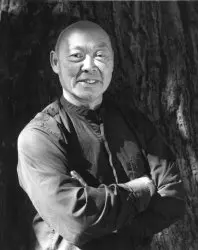
One of the most inspiring stories to understand the transition from “external” practice to deep internal comprehension is that of Master Fong Ha (1937–2019).
From Guangzhou, he began martial arts at a very young age with impressive physical intensity. At 16, he met Tung Ying-chieh, a master of the Yang style of Taijiquan (direct disciple of Yang Chengfu), and faced a paradox: despite all his athletic abilities, he could never touch this reserved, calm, immobile master, because he opposed no visible force.
This experience changed his life: he understood that mastery does not lie in muscular power accumulation, but in Qi, intention, relaxation, and awareness.
He later studied with Yang Chengfu’s descendants and explored Yi Chuan and Chi Gong, eventually becoming a respected teacher in Berkeley, California, where my parents learned with him Yang-style Tai Chi Chuan and Yi Chuan, before passing it on to me.
To me, Sifu Fong was the human incarnation of internal martial arts — peaceful and calm, yet powerful and steady, choosing to adapt instead of forcing things in life.
His teachings invite us to develop Qi to direct intention, and to perceive movement as an expression of internal awareness, rather than the application of brute force.
Body, Breath, and Mind — One Path
Rather than rigid categories, I like to see martial arts like different paths of a mountain.
At the foot of the mountain, all different paths are far away from each other, and they look almost nothing alike.
Some paths are direct, physical, linear;
others are fluid, subtle, circular.
But as one progresses, they eventually become closer and closer, until they all lead to the same summit: harmonious mastery of body, breath, and mind.
It is not just a destination, but a shared vision for all who walk the Way.
When Internal Practice Becomes Evident
What I have realized — and what many students grasp over time — is that internal practice is not “soft” or “easy.”
It is demanding, silent, and subtle. It requires:
- letting go of unnecessary tension,
- observing movement rather than performance,
- feeling breath before planning the gesture,
- finding power in relaxation.
Paradoxically, this invisible work eventually produces incredible effectiveness in real-life applications.
A Practice for Life
Internal arts are not meant to impress at first glance.
They transform from the inside out.
Not in a day, nor in a season.
But gradually, like a plant reaching for light.
Because Kung Fu, when practiced in depth, becomes a science of movement, breath, and mind - an invitation to enjoy the journey, rather than rushing toward the end.
Internal Martial Arts: Kesako?